The Future of Education: Impacts of AI in 2025
Artificial intelligence (AI) is transforming education at an accelerated pace. Tools like ChatGPT, Deepseek, Gemini, and Perplexity are changing the way we teach and learn, sparking intense debate about their impact on writing and creativity. Far from being a threat, AI is emerging as a powerful ally with the potential to revolutionize education in 2025.
So, what will these changes be?
AI in Education: Trends That Will Define 2025
Integration of AI as a writing support tool: It will be used to improve grammar, style, and clarity, not to replace human creativity.
Personalization of learning: It will allow educational materials to be tailored to the individual needs of each student.
Greater accessibility to education: AI-powered platforms will facilitate access to education in remote or resource-limited areas.
Emphasis on academic integrity: Tools like Turnitin will continue to evolve to detect plagiarism and promote original writing in the age of AI.
Development of critical skills: A balance will be sought between the use of AI and the development of critical thinking and problem-solving skills in students.

The Future of Education: Collaboration Between Humans and Machines in 2025
2024 marked the beginning of AI integration in education, but 2025 is projected as the year of consolidation, where humans and machines will work together to enrich the learning process. Far from being a threat to writing, artificial intelligence becomes a strategic ally that enhances creativity and accessibility.
AI: Complement, Not Replacement, of Human Creativity
Tools like ChatGPT do not seek to replace human creative capacity but to enhance it. They facilitate the exploration of new forms of expression and analysis, streamlining processes and opening new areas of study such as rapid engineering. As María Belén Correa, director of Turnitin for Latin America, points out: “There is no simple answer as to whether AI will prevail over human writing, but both can be used together to achieve the best results.”

Writing: An Essential Skill in the Age of AI
The ability to write clearly and accurately becomes even more crucial in a technology-driven world. Mastering communication with AI to convey complex information will become an indispensable skill. Additionally, writing will remain the primary tool for assessing students’ understanding and learning, maintaining the fundamental principles of education.
AI for Equity and Accessibility
Generative AI has the potential to democratize education. Tools like real-time translation and grammar correction break down linguistic and cultural barriers. However, access to premium paid services poses the challenge of avoiding the widening of the technological gap.
Evolution of Generative and Detection AI Tools
AI tools, both generative and detection, will continue to evolve to meet the needs of students and educators. Greater familiarity with these technologies is expected, transforming the way they are used. The future focuses on transparency and dialogue between educators and students, fostering trust and commitment to academic integrity.
In the end, the future of education is not about choosing between humans or machines, but about forging a symbiotic collaboration that benefits everyone.
Create Your Digital Twin for Studying
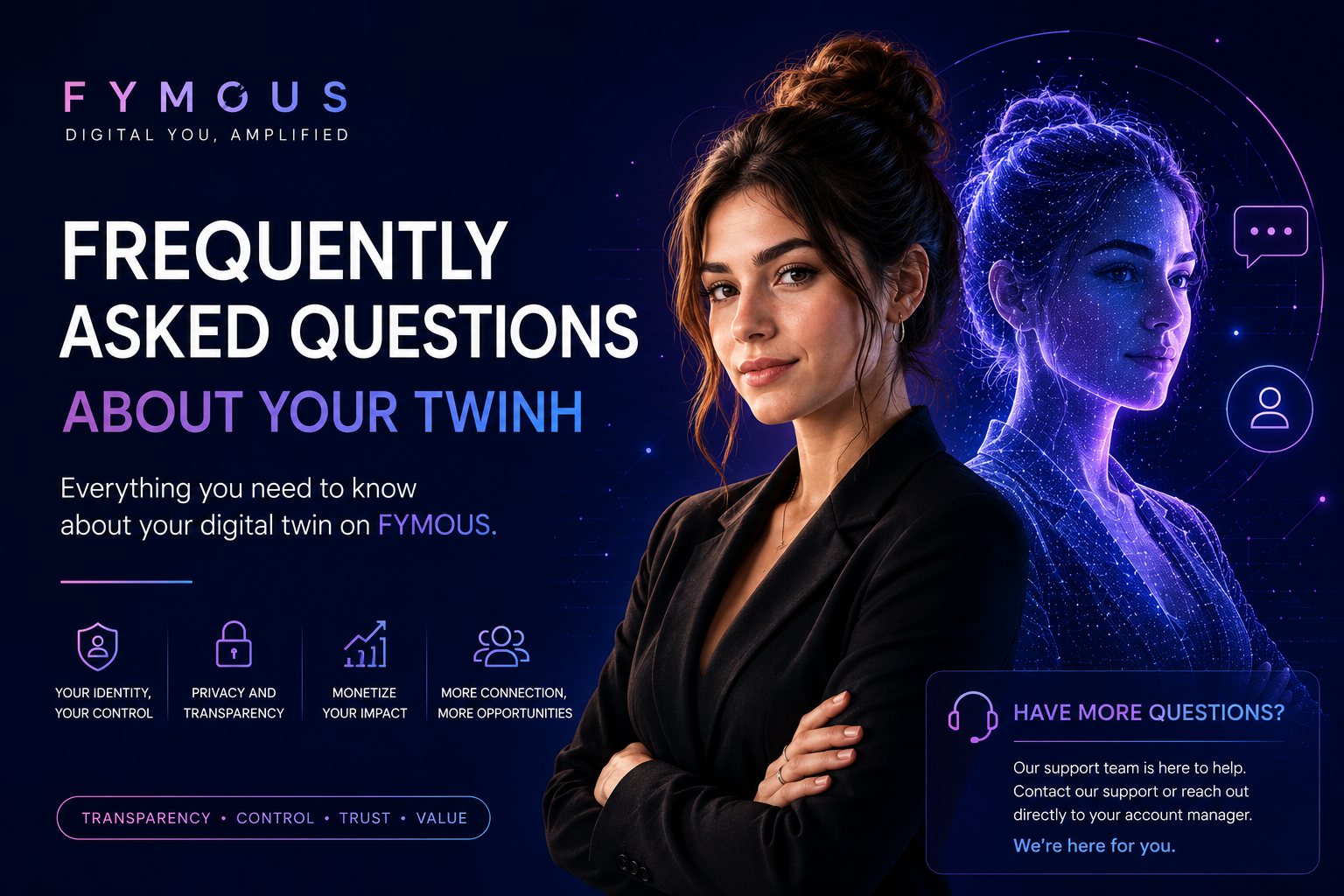
From the Spanish company FySelf comes TwinH, the innovative tool that allows you to create a digital twin capable of helping you in both work and academic fields. Imagine having a personal assistant available 24/7, trained with your own experiences and knowledge.
How does it work?
The application, easy to download and use, allows you to create a digital replica of yourself. TwinH learns from your experiences and becomes a personalized assistant. Similarly, it is capable of performing tasks, answering questions, and even offering you advice based on your own knowledge.
A world of possibilities
The applications of this technology are endless. From solving technical problems to managing daily tasks, a digital twin can be the ultimate tool for productivity and learning.
Imagine being able to delegate repetitive tasks to your TwinH while you focus on more creative or complex projects. Or think about the possibility of accessing a personalized tutor, available at any time and place, to guide you in your studies.
Science fiction or reality?
Although it may seem like something out of a futuristic movie, this technology is already a reality. TwinH is available for download and promises to revolutionize the way we work and learn. Can you imagine having your own digital twin?
Download the app and start exploring the future of productivity and learning.
Related posts