Amazon ultrafast delivery
Amazon Wants to Deliver Your Orders in 30 Minutes: The Addictive Future of Ultrafast Delivery
Can you imagine placing an order and receiving it before your coffee gets cold?
Amazon is testing a new model of ultrafast delivery that promises to revolutionize —once again— the way we shop online. The goal: get your everyday essentials delivered to your door in 30 minutes or less.
Milk, batteries, snacks, or painkillers… all arriving before your movie starts. It’s not a dream or a simple experiment — it’s a strategic move designed to change how (and how often) you buy.
Amazon Now: A Bet on Immediacy
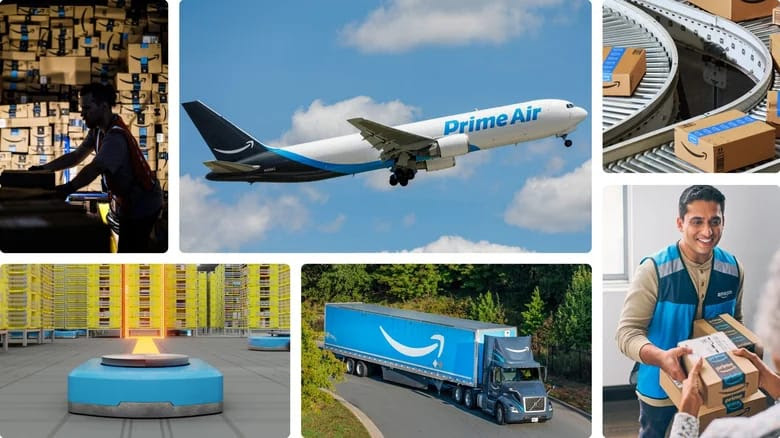
The e-commerce giant is already testing this model in Seattle and Philadelphia through its Amazon Now service, which relies on small, strategically placed micro-fulfillment centers close to customers.
By shortening the distance between warehouse and user, Amazon is tackling one of online shopping’s toughest challenges: delivery time.
This isn’t the first attempt to conquer immediacy. During the pandemic, startups like Gopuff, Getir, and Gorillas tried to master ultrafast delivery. Yet high operating costs and logistical complexity led most of them to fail. Today, Gopuff is the only survivor — with its valuation cut in half.
Amazon, however, has something those startups didn’t: scale, infrastructure, and data.
The Real Strategy Isn’t About Speed
While “30 minutes” grabs headlines, speed isn’t the real story. The real product Amazon is selling is convenience — and habit.
Think about it: daily essentials such as groceries, cleaning supplies, or toiletries don’t yield big margins. But what they do best is bring you back again and again.
Each quick purchase, each frictionless experience, is another reason to return to Amazon. And every visit becomes an opportunity to add “just one more thing” to your cart.
So, no — speed isn’t the product.
The product is the removal of friction.
How Ultrafast Delivery Could Reshape Consumer Behavior
What looks like a logistics improvement could spark an entirely new consumer habit.
-
More impulsiveness: When you can get something in 30 minutes, you think less before buying.
-
More frequency: You’ll return repeatedly, even for small items.
-
More loyalty: Convenience strengthens Amazon’s position as your go-to option.
-
Less competition: Every saved minute raises the barrier for rivals.
At its core, Amazon doesn’t just want you to shop faster — it wants you to never stop shopping.
The Future of Shopping in 30 Minutes or Less
If this model scales, it could redefine urban logistics, customer expectations, and local retail. Last-minute purchases —a forgotten gift, an impromptu dinner, or missing batteries— could quickly shift into Amazon’s hands.
If successful, the company won’t just have accelerated deliveries — it will have accelerated consumption itself.
The real question isn’t whether Amazon can do it.
It’s: what happens when waiting 30 minutes feels too long to buy something?
When Convenience Becomes Habit
Amazon’s ultrafast delivery aims to eliminate waiting — but it also invites us to reflect on immediacy as a habit. By removing friction from the buying process, Amazon isn’t just delivering packages… it’s shaping behavior.
The next time you need something in half an hour, it won’t just be another purchase. It’ll be another small victory for the empire of convenience.
Related posts